
When most people think about healthcare, they think about what happens after something goes wrong. Back pain develops, the neck starts hurting, or an old injury becomes difficult to tolerate. Then come appointments, medications, imaging studies, and sometimes surgery.
But what if healthcare placed greater emphasis on helping people remain healthy, mobile, and active before problems become severe?
That is an important message from the Foundation for Chiropractic Progress article, The Benefits of Chiropractic in Public Health. Chiropractic care can play an important role in public health by providing conservative, drug-free care for common musculoskeletal conditions while helping patients maintain mobility and function.
Prevention Instead of Waiting for Pain
Think about driving your car with the check-engine light on. You can investigate the problem early—or keep driving until something expensive breaks.
Unfortunately, many people take the second approach with their spine.
Occasional neck stiffness becomes recurring headaches. Intermittent lower-back pain becomes a regular problem. Eventually, discomfort begins interfering with work, exercise, sleep, and everyday life.
Chiropractic care provides a conservative approach to evaluating and managing many common musculoskeletal problems.
At Charles Street Family Chiropractic in Beacon Hill, we encourage Boston patients to address spinal problems before they become more disruptive.
The goal isn’t simply reducing pain. It’s helping people maintain mobility, function, and independence.
A Drug-Free Approach to Pain
Chronic pain is a major public health problem. Back pain, neck pain, and other musculoskeletal conditions can dramatically affect quality of life.
Medications may provide relief, but certain drugs—particularly opioids—carry significant risks. Chiropractic provides a nonpharmacological option for appropriate musculoskeletal conditions. Spinal manipulation, therapeutic exercise, rehabilitation, and patient education can help manage certain types of neck and lower-back pain without prescription medication or surgery.
For people seeking drug-free back pain treatment in Boston, chiropractic care may be an important part of a comprehensive treatment plan.
Pain Affects More Than Your Spine
Persistent pain can affect sleep, physical activity, stress levels, work, and overall quality of life.
The Foundation for Chiropractic Progress also discusses the relationship between chronic pain and mental health conditions such as anxiety and depression.
Chiropractic isn’t a treatment for anxiety or depression. However, successfully managing musculoskeletal pain may make it easier for patients to exercise, sleep, work, socialize, and participate in activities that support overall health.
Could Chiropractic Help Reduce Recurring Back Pain?
One particularly interesting study discussed by the Foundation is the 2018 Nordic Maintenance Care Study.
Researchers studied people with recurrent or persistent lower-back pain who responded favorably to initial chiropractic treatment.
Over one year, patients receiving scheduled maintenance chiropractic care experienced fewer days with bothersome lower-back pain than patients who received treatment only when symptoms returned.
This is a great benefit of ongoing chiropractic treatment. Waiting for the next painful episode rarely is the best strategy.
Chiropractic as Part of Mainstream Healthcare
Chiropractic shouldn’t exist separately from the rest of healthcare.
Patients benefit when chiropractors, primary-care physicians, physical therapists, imaging specialists, and other healthcare professionals communicate and collaborate.
Some spinal conditions require medication, injections, or surgery. Others may respond well to conservative treatment.
The important question is choosing the right treatment for the right patient.
For many musculoskeletal conditions, conservative treatment should be considered early—not simply after more invasive treatments have failed.
University of South Florida: Neurosurgeons and Chiropractors Working Together
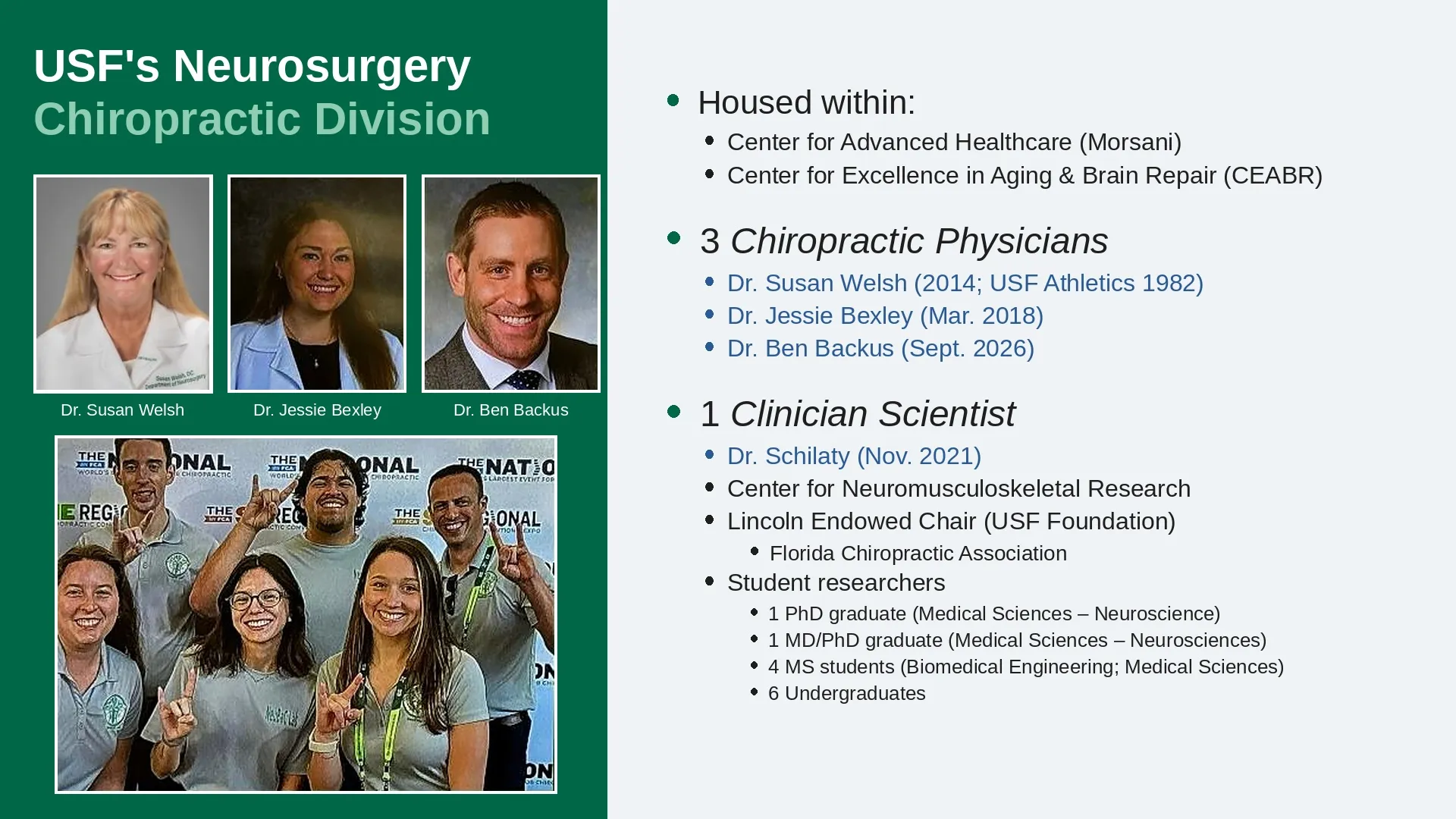
An excellent example of integrated spine care is the University of South Florida (USF) Health, where chiropractic services operate within the Department of Neurosurgery, Brain and Spine. Rather than treating chiropractic and surgery as competing approaches, USF brings these professionals into the same academic healthcare setting.
USF chiropractors evaluate patients with back and neck pain, review appropriate imaging, and discuss nonsurgical treatment options. When surgery is necessary, patients can transition to a neurosurgical consultation. The department also supports chiropractic research and education, including work led by Nathan Schilaty, DC, PhD, its Lincoln Endowed Chair of Chiropractic & Biomechanics Research.
For Boston patients, the lesson is simple: the best spine care is collaborative. Conservative treatment and surgical expertise should complement each other, with patient needs determining the next step.
Better Spinal Health Can Support an Active Life
Public health isn’t simply about living longer. It’s also about maintaining a good healthspan—the years we remain active, mobile, and independent.
When back or neck pain prevents someone from exercising, the consequences can extend beyond the spine. Physical activity decreases, muscles weaken, weight management becomes more difficult, and everyday activities can become harder.
Whether you’re running along the Charles River, working long hours at a desk in Back Bay, or simply trying to remain active as you get older, musculoskeletal health matters.
A Healthier Boston Starts With Better Choices
The Foundation for Chiropractic Progress makes an important argument: healthcare should emphasize prevention, education, conservative treatment, and collaboration.
Chiropractic care can contribute to those goals, particularly for common spinal and musculoskeletal problems. At Charles Street Family Chiropractic, we’ve been helping Boston-area patients with spinal health concerns since 1990.
If you’re experiencing back pain, neck pain, sciatica, disc herniation or recurring spinal problems, consider consulting with Dr. Chris Quigley to determine whether chiropractic care may be appropriate for you. Tap here to make an appointment.
Charles Street Family Chiropractic
Boston Spine, Disc & Car Accident Specialists
102 Charles Street, Beacon Hill, Boston
617-720-1992
Source
Foundation for Chiropractic Progress.The Benefits of Chiropractic in Public Health.
Additional source: USF Health, Department of Neurosurgery, Brain and Spine — Chiropractic Division and Chiropractic Therapy pages.