One of the most common arguments made by insurance companies after a motor vehicle collision is that neck pain should resolve within a few weeks.
“If your client still hurts months later,” they argue, “something else must be causing the pain.”
A landmark systematic review and meta-analysis published by Nolet in Physical Medicine & Rehabiliation in 2019 challenges that assumption.
Researchers analyzed the best available scientific evidence to determine whether exposure to a motor vehicle collision increases the risk of developing future neck pain. Their conclusion was clear: individuals involved in motor vehicle collisions are significantly more likely to experience long-term neck pain than people who have never been injured in a crash.
For personal injury attorneys, this study provides strong scientific support for what many clients experience every day.
Looking at the Best Available Evidence
Rather than relying on a single study, the authors conducted a systematic review and meta-analysis, considered one of the highest levels of medical evidence.
The researchers reviewed multiple high-quality studies involving thousands of participants and compared individuals who had been exposed to motor vehicle collisions with those who had not.
By combining data from several investigations, they were able to provide a much more reliable estimate of the long-term effects of automobile crashes.
A Collision Can Change the Future
The findings were striking.
People who had been involved in a motor vehicle collision demonstrated a significantly greater risk of developing persistent or recurrent neck pain than individuals without a history of collision-related injury.
Importantly, this increased risk remained long after the initial trauma had healed.
In other words, a collision is not always a temporary event.
For many people, it becomes the starting point of a chronic pain condition.
During a rear-end collision, the cervical spine experiences rapid acceleration and deceleration forces capable of injuring multiple tissues simultaneously, including:
· Cervical facet joints
· Ligaments
· Intervertebral discs
· Muscles and tendons
· Joint capsules
· Supporting connective tissues
Many of these structures contain pain-sensitive nerve endings.
Even when X-rays or MRI studies appear relatively normal, microscopic injury, ligament damage, and joint dysfunction may continue producing pain months or even years after the collision.
This helps explain why some clients continue to experience symptoms despite the absence of dramatic imaging findings.
The Insurance Company’s Favorite Argument
Insurance adjusters frequently argue that ongoing neck pain is simply part of aging.
The scientific evidence tells a different story.
This review found that people exposed to motor vehicle collisions have a substantially greater likelihood of developing chronic neck pain than those who have never experienced such trauma.
While age-related degeneration certainly exists, trauma can accelerate symptoms, aggravate previously silent conditions, or create entirely new sources of pain.
The collision may not simply “wake up” a problem—it may create one.
Early Treatment Matters
The authors also emphasize the importance of appropriate early management following whiplash injuries.
Modern clinical guidelines increasingly recommend active conservative care rather than prolonged rest.
For many patients, chiropractic physicians play an important role in this process through:
· Careful biomechanical evaluation
· Spinal manipulation or mobilization when clinically appropriate
· Therapeutic exercise
· Soft tissue therapy
· Postural rehabilitation
· Patient education
· Functional recovery programs
The goal is not merely to reduce pain but to restore normal movement and reduce the likelihood that acute injuries evolve into chronic pain syndromes.
Why This Matters for Attorneys
For Boston personal injury attorneys, this study reinforces an important principle: chronic neck pain following a motor vehicle collision is both medically plausible and scientifically supported.
Defense experts often suggest that persistent symptoms are unrelated to the crash because imaging studies are unremarkable or because “most people recover quickly.”
This systematic review demonstrates that exposure to a motor vehicle collision itself is a significant risk factor for future neck pain.
When representing clients injured in Boston, Cambridge, Quincy, Newton, Brookline, or throughout Massachusetts, understanding this research can help explain why seemingly routine rear-end collisions sometimes produce lasting consequences.
The Bottom Line
Motor vehicle collisions do more than damage vehicles—they can permanently alter the health of the cervical spine.
This high-level review demonstrates that people involved in automobile crashes face a significantly greater risk of developing chronic neck pain than those who have never experienced such trauma.
For attorneys, this research provides powerful evidence that persistent neck pain is not simply a subjective complaint or an inevitable consequence of aging. It is a well-recognized outcome of motor vehicle collisions supported by some of the strongest scientific evidence available.
If your client continues to experience neck pain months after a collision, the question should not be, “Why do they still hurt?”
Based on the evidence, a better question is:
“Why wouldn’t they?”
If you have questions about the biomechanics of whiplash injuries or need assistance understanding the medical aspects of a case, call Dr. Chris Quigley at 617-720-1992.
Reference
Nolet PS, Emary PC, Kristman VL, Murnaghan K, Zeegers MP, Freeman MD. Exposure to a Motor Vehicle Collision and the Risk of Future Neck Pain: A Systematic Review and Meta-Analysis.PM&R. 2019;11(11):1228-1239. doi:10.1002/pmrj.12173.
“I was majoring in chemistry at Villanova University when my path turned to chiropractic. I was going on interviews to be a pharmaceutical sales representative, and they always asked me what I wanted to be doing in five years. My answer was always the same: “I want to be helping people, enjoying my work, while making a difference.”
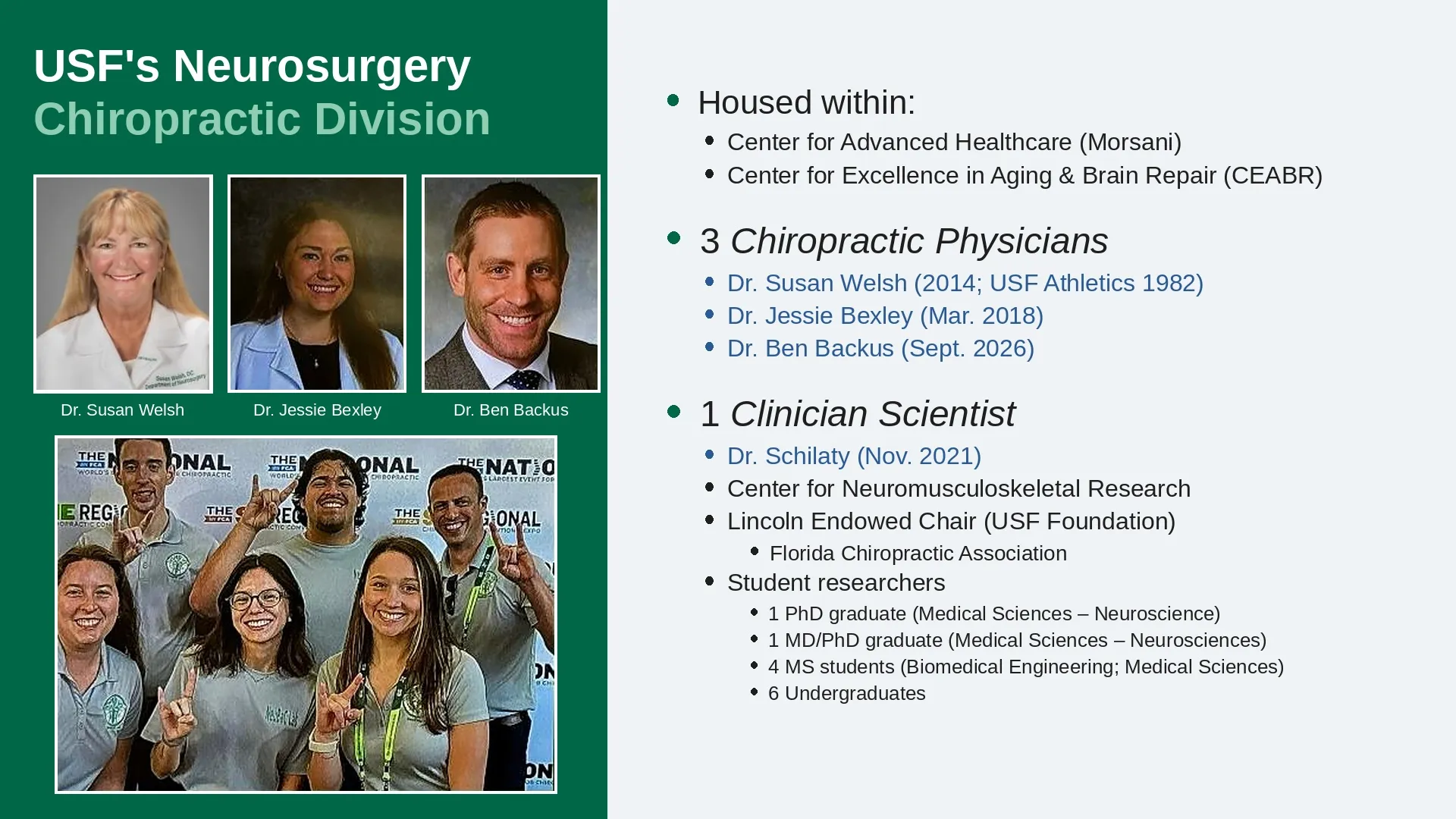
Looking for a Boston chiropractor focused on conservative, drug-free spine care? At Charles Street Family Chiropractic in Beacon Hill, Dr. Chris Quigley helps patients with back pain, neck pain, sciatica, disc problems, and recurring spinal conditions. Chiropractic care can support mobility, function, and active living while reducing reliance on medications and invasive procedures. Even major medical centers, including the University of South Florida Neurosurgery program, are integrating chiropractic care into collaborative spine treatment and research.
A 2015 MRI study found signs of alar ligament injury in 55% of older patients whose chronic neck pain had no other identifiable cause. For Boston and Massachusetts personal injury attorneys, that finding speaks to a familiar problem: the client who still hurts months after a car crash, but whose standard imaging reads as “normal” or “age-related degeneration.”
The number that should stop every elective-surgery patient in their tracks is 94%. In a large 2017 Journal of Pain Research study of 1,842 people who had undergone lumbar spine surgery, 94% reported some degree of residual low-back pain. That does not mean 94% had severe pain, nor does it mean 94% of the operations were surgical failures. But for an invasive procedure that many patients understandably hope will eliminate their back pain, the persistence of any low-back pain in such a large proportion of respondents is difficult to dismiss. The same study found that 20.6% met the researchers’ criteria for failed back surgery syndrome —roughly one out of every five patients. Residual numbness was reported by 69.8%, cold sensations by 43.3%, and paresthesia such as tingling or abnormal sensations by 35.3%.