One of the most overlooked details in a motor vehicle collision may also be one of the most important:
Which direction was the victim looking at the moment of impact?
For years, biomechanical researchers have observed that some whiplash victims experience more severe symptoms and longer recovery times than others, even when the collisions appear similar. Groundbreaking research by Dr. Manohar Panjabi and colleagues at Yale University may help explain why. Their study, Multiplanar Cervical Spine Injury Due to Head-Turned Rear Impact, provides compelling evidence that occupants who have their head turned at the moment of a rear-end collision may sustain more significant cervical spine injuries than those facing forward.
Knowledge of this research is key to understanding these injuries and their impact. This is why it is so important to work with a qualified expert such as Dr. Quigley.
The Real-World Scenario
Think about everyday driving.
A driver checks traffic before changing lanes. A passenger turns to speak to a child in the back seat. A motorist looks left before entering an intersection.
In each of these situations, the cervical spine is rotated before impact occurs.
According to Panjabi’s research, this seemingly minor position change may dramatically alter how forces are distributed throughout the neck during a rear-end collision.
For personal injury attorneys, this is a critical fact because police reports, witness statements, and client histories often document head position immediately before impact.
What the Researchers Found
Using human cervical spine specimens and a sophisticated biomechanical model that replicated muscle forces, Panjabi and his team subjected cervical spines to simulated rear impacts while the head was turned. The researchers then evaluated the resulting soft tissue injuries by measuring changes in spinal flexibility and motion.
Their findings were striking.
The injury threshold occurred at approximately 5 g of acceleration, and injuries were identified at multiple cervical levels. More importantly, head-turned rear impacts produced significantly greater injury than previously studied forward-facing impacts. The most pronounced injuries occurred at C0-C1 and C5-C6, regions frequently associated with chronic neck pain, headaches, dizziness, and upper cervical dysfunction.
The study also identified what researchers described as multiplanar injuries, meaning tissue damage occurred simultaneously in more than one direction of motion. Instead of experiencing a simple extension injury, the cervical spine was subjected to a combination of extension, rotation, and other complex forces.
Why This Matters Legally
Defense experts frequently argue that low-speed collisions are incapable of producing significant injury. However, Panjabi’s work demonstrates that occupant position is a major variable in injury causation.
A person looking straight ahead and a person looking over their shoulder are not exposed to the same biomechanical loads during a rear-end collision. The rotated cervical spine is inherently less symmetrical and may be more vulnerable to tissue injury when subjected to sudden acceleration forces.
For attorneys, this creates an important opportunity.
When evaluating a case, it may be valuable to determine:
Was the client looking left or right before impact?
Was the client checking mirrors?
Were they engaged in conversation with a passenger?
Were they preparing for a lane change or turn?
These facts may have biomechanical significance that extends beyond simple liability analysis.
Explaining Persistent Symptoms
One of the challenges in whiplash litigation is explaining why some patients experience prolonged symptoms despite relatively modest vehicle damage.
Panjabi’s findings offer a plausible scientific explanation.
Multiplanar injuries involve complex loading patterns that may affect facet joints, ligaments, joint capsules, and supporting cervical soft tissues. These structures often do not appear abnormal on conventional MRI or CT imaging, yet they can become significant pain generators.
This may help explain why some individuals develop chronic neck pain, headaches, dizziness, or reduced range of motion despite the absence of obvious radiographic findings.
The Takeaway for Personal Injury Attorneys
The significance of Panjabi’s work extends beyond biomechanics.
It highlights the importance of thoroughly documenting accident circumstances and occupant position. A seemingly simple question—”Which way were you looking?”—may become a critical component of causation analysis.
As whiplash science continues to evolve, research increasingly demonstrates that cervical injuries are not one-size-fits-all. The position of the head at impact may influence not only the severity of injury but also the type of tissues injured and the duration of symptoms.
For attorneys seeking to establish causation, rebut low-impact defenses, and explain persistent symptoms, Panjabi’s research provides a powerful biomechanical framework grounded in objective scientific investigation. Call Dr. Chris Quigley at 617-720-1992 to discuss helping your clients. Here is the link to his Amazon best seller book, After the Car Crash.
Literature Citation
Panjabi MM, Ivancic PC, Maak TG, Tominaga Y, Rubin W. Multiplanar Cervical Spine Injury Due to Head-Turned Rear Impact.Spine (Phila Pa 1976). 2006;31(4):420-429. doi:10.1097/01.BRS.0000199940.61373.D5. PMID: 16481952.
“I was majoring in chemistry at Villanova University when my path turned to chiropractic. I was going on interviews to be a pharmaceutical sales representative, and they always asked me what I wanted to be doing in five years. My answer was always the same: “I want to be helping people, enjoying my work, while making a difference.”
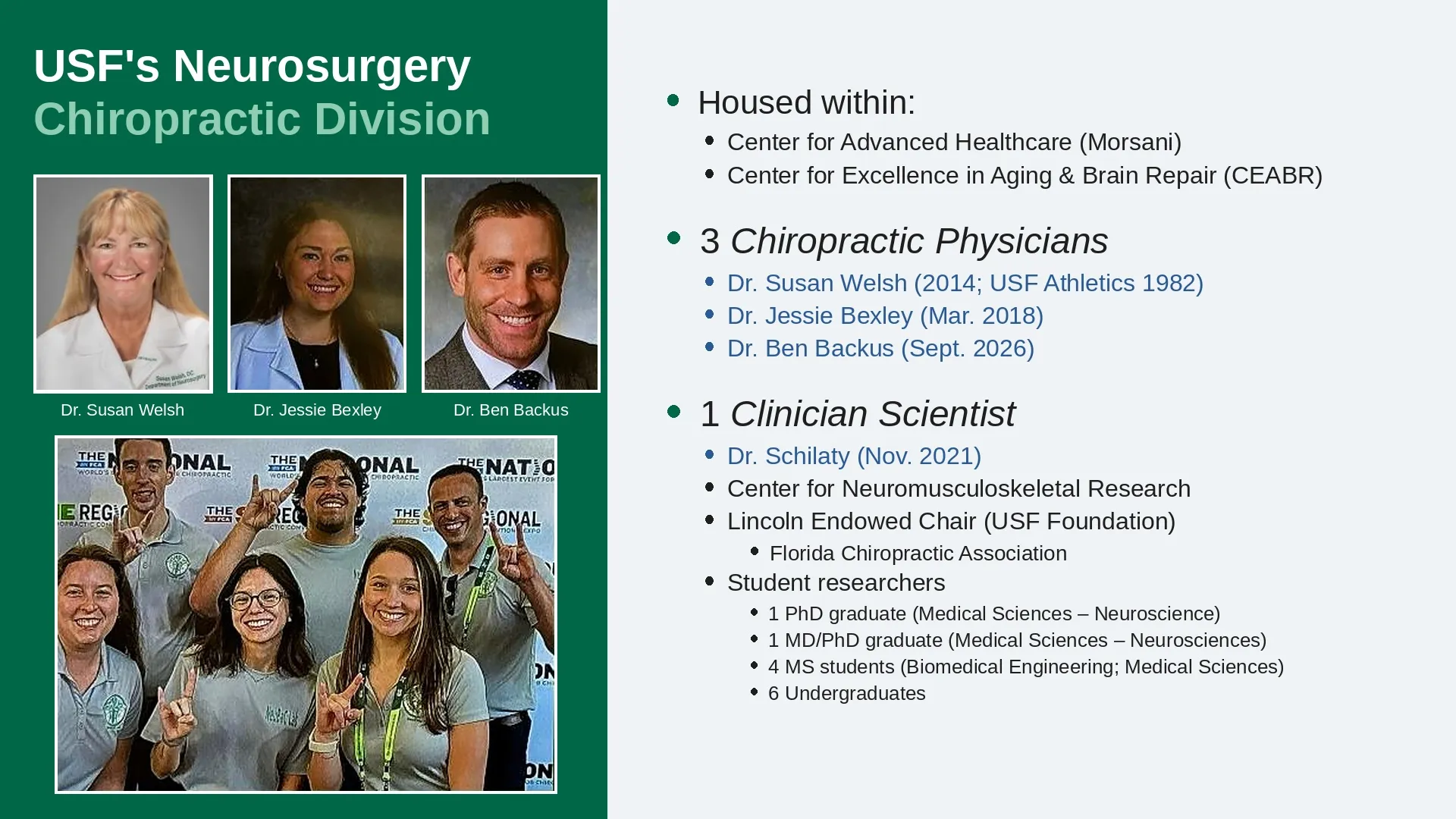
Looking for a Boston chiropractor focused on conservative, drug-free spine care? At Charles Street Family Chiropractic in Beacon Hill, Dr. Chris Quigley helps patients with back pain, neck pain, sciatica, disc problems, and recurring spinal conditions. Chiropractic care can support mobility, function, and active living while reducing reliance on medications and invasive procedures. Even major medical centers, including the University of South Florida Neurosurgery program, are integrating chiropractic care into collaborative spine treatment and research.
A 2015 MRI study found signs of alar ligament injury in 55% of older patients whose chronic neck pain had no other identifiable cause. For Boston and Massachusetts personal injury attorneys, that finding speaks to a familiar problem: the client who still hurts months after a car crash, but whose standard imaging reads as “normal” or “age-related degeneration.”
The number that should stop every elective-surgery patient in their tracks is 94%. In a large 2017 Journal of Pain Research study of 1,842 people who had undergone lumbar spine surgery, 94% reported some degree of residual low-back pain. That does not mean 94% had severe pain, nor does it mean 94% of the operations were surgical failures. But for an invasive procedure that many patients understandably hope will eliminate their back pain, the persistence of any low-back pain in such a large proportion of respondents is difficult to dismiss. The same study found that 20.6% met the researchers’ criteria for failed back surgery syndrome —roughly one out of every five patients. Residual numbness was reported by 69.8%, cold sensations by 43.3%, and paresthesia such as tingling or abnormal sensations by 35.3%.