I was recently stopping at my local Walgreens to get some toothpaste and I was shocked by the plethora of signs enticing customers to get a flu shot. I found them in the parking lot, on the doors to the store, inside the store.
Where is the disclosure about the details of the flu shot? Where is the list of flu shot ingredients that include Mercury and other nasty stuff? What are the long term side effects of these flu shots? Has it been studied? What are the safer and more effective options than rolling up your sleeve and pledging your oath and faith to modern medicine by trusting what is in that shot will make you healthier. Even if the package says: ” This indication is based on the immune response elicited by AFLURIA; there have been NO controlled clinical studies demonstrating a DECREASE in influenza disease after vaccination with AFLURIA (see Clinical Studies [14]).”
I believe that vaccination is the first sacrament in the religion of modern medicine. People in our society, without getting informed about what is in these chemical concoctions, line up themselves and their children to get their shot because the high priest of the church of modern medicine, says “roll those sleeves up.” Have faith that it will work. If we ask the hard questions like Does it really work? What is in it? What else might work better? The flu shot will not be so popular anymore.
This is such a huge topic that I could easily write a long book on it, but today I am going to discuss the ingredients of the flu shot. I have given you a short exerpt from Wikipedia and you can click on the link to read the rest.
I cannot figure out why these company’s put this stuff in a vaccine. Could we figure out something a bit less toxic than Mercury, antibiotics, carcinogens, detergents? You can’t make this stuff up. Read on and remember that you need to protect yourself.
What is in the Flu Shot? According the the package insert for the Afluria influenza vaccine, It contains:
Potassium Cholride: Orally, potassium chloride is toxic in excess;, But intravenously, without the step of digestive absorption, this is reduced to just over 30 mg/kg.[14] Most concerns are its severe effects on the cardiac muscles: high doses can cause cardiac arrest and rapid death, thus the aforementioned use as the third and final drug delivered in the lethal injection process.
Sodium Taurodeoxycholate: accelerates the release of total phosphorus, lipid phosphorus, and protein from isolated everted rat small intestinal sacs. The effect occurs at concentrations of the physiological surfactant above the CMC. The effect of sodium taurodeoxycholate on components of the biological membrane can be related to an increase in permeability of the everted intestine to phenol red in the presence of various concentrations of the surfactant. The interaction of the surfactant with the biological membrane may produce an acceleration of the loss of structural integrity of the preparation, resulting in an increased permeability to phenol red.
Neomycin Sulfate: It is not given intravenously, as neomycin is extremely nephrotoxic (causes kidney damage), especially compared to other aminoglycosides. The exception is when neomycin is included, in very small quantities, as a preservative in some vaccines – typically 0.025 mg per dose.[1]
Ovalbumin: is the main protein found in egg white, making up 60-65% of the total protein.[2] Ovalbumin displays sequence and three-dimensional homology to the serpin superfamily, but unlike most serpins it is not a serine protease inhibitor.[3] The function of ovalbumin is unknown, although it is presumed to be a storage protein.[4]
Polymyxin Bis an antibiotic primarily used for resistant Gram-negative infections. It is derived from the bacterium Bacillus polymyxa. Polymyxin B is a mixture of two closely related compounds, polymyxin B1 and polymyxin B2. It has a bactericidal action against almost all Gram-negative bacilli except the Proteus group. Polymyxins bind to the cell membrane and alter its structure, making it more permeable. The resulting water uptake leads to cell death. Polymyxins are cationic, basic proteins that act like detergents (surfactants). Side effects include neurotoxicity and acute renal tubular necrosis. Polymyxins are used in the topical first-aid preparation Neosporin.
?-Propiolactone is “reasonably expected to be a human carcinogen” (IARC, 1999).[1] It was once widely used in the manufacture of acrylic acid and its esters, but its use has been mostly phased out in favor of safer and less expensive alternatives. ?-Propiolactone is a disinfectant and has been used to sterilize blood plasma, vaccines, tissue grafts, surgical instruments, and enzymes.[1]
“I was majoring in chemistry at Villanova University when my path turned to chiropractic. I was going on interviews to be a pharmaceutical sales representative, and they always asked me what I wanted to be doing in five years. My answer was always the same: “I want to be helping people, enjoying my work, while making a difference.”
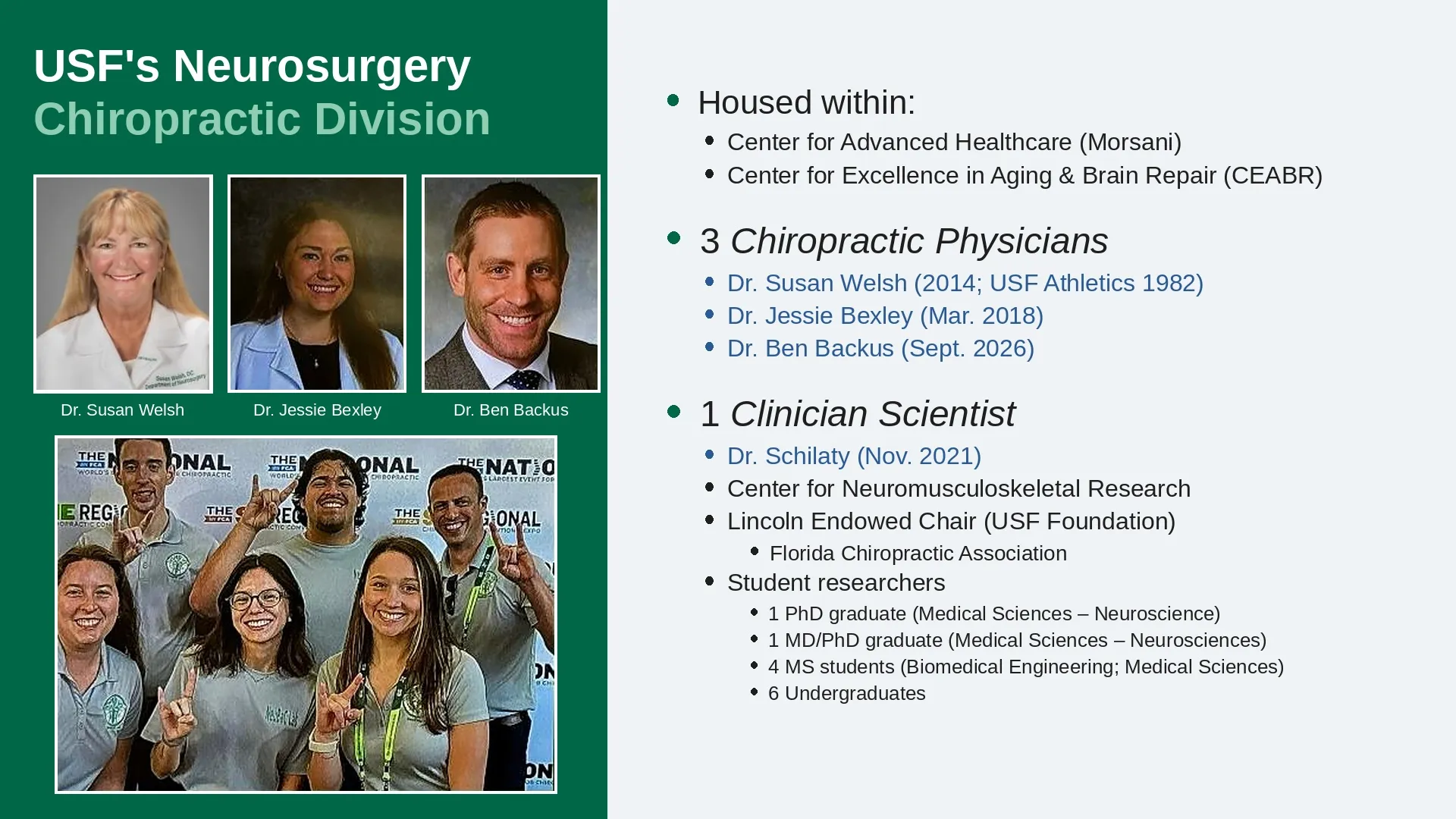
Looking for a Boston chiropractor focused on conservative, drug-free spine care? At Charles Street Family Chiropractic in Beacon Hill, Dr. Chris Quigley helps patients with back pain, neck pain, sciatica, disc problems, and recurring spinal conditions. Chiropractic care can support mobility, function, and active living while reducing reliance on medications and invasive procedures. Even major medical centers, including the University of South Florida Neurosurgery program, are integrating chiropractic care into collaborative spine treatment and research.
A 2015 MRI study found signs of alar ligament injury in 55% of older patients whose chronic neck pain had no other identifiable cause. For Boston and Massachusetts personal injury attorneys, that finding speaks to a familiar problem: the client who still hurts months after a car crash, but whose standard imaging reads as “normal” or “age-related degeneration.”
The number that should stop every elective-surgery patient in their tracks is 94%. In a large 2017 Journal of Pain Research study of 1,842 people who had undergone lumbar spine surgery, 94% reported some degree of residual low-back pain. That does not mean 94% had severe pain, nor does it mean 94% of the operations were surgical failures. But for an invasive procedure that many patients understandably hope will eliminate their back pain, the persistence of any low-back pain in such a large proportion of respondents is difficult to dismiss. The same study found that 20.6% met the researchers’ criteria for failed back surgery syndrome —roughly one out of every five patients. Residual numbness was reported by 69.8%, cold sensations by 43.3%, and paresthesia such as tingling or abnormal sensations by 35.3%.