According to the literature there is an epidemic of missed injuries in whiplash and auto injury cases. In the Journal Spine, the number one orthopedic journal in the world, Jonsson et al wrote “in a recent investigation, we found a high incidence of potentially deleterious concomitant discoligamentous injuries in 20 traffic accident victims who had sustained lethal skull fractures in motor vehicle accidents. Experimental radiographs did not detect four fractures and more than 200 soft tissue injuries. (WOW!) He goes on to write: Magnetic resonance studies 6-8 weeks after the injury did not show any of the posterior (ligamentous) injuries although severe neck pain and abnormal posterior gaping on flexion-extension radiograms indicated posterior injuries that subsequently at surgery presented as fresh ruptures or scar tissue.
The insurance industry has noticed this and has embarked on a systematized program of decreasing injury payouts for the most common injuries suffered in car collisions. This is especially apparent where the crash damage to the car is less than $1500. Some of the decrease in claim value has been the result of insurers bad faith efforts to make their customers premiums an income stream for their corporate shareholders. Some of the decrease is related to the lack of documentation provided by the health care industry. The high overhead of the medical practitioner ($100K+ malpractice premiums for a surgeon), coupled with ever decreasing reimbursements, necessitates a high-volume practice and too many critical details in in the doctor’s documentation are left out and important injuries are missed.
According to James Mathis, a former claims senior supervisor and management specialist for State Farm and Allstate who instituted these claims processing/reducing algorithms, there are 4 case value drivers:
Injuries
Impairment rating
Duties Under Duress: activities which you can do, but it hurts
Functional Loss: activities that you can no longer do
A critical component is the impairment rating. This is due to the fact that the impairment rating unlocks the value in the “Duties Under Duress” and the “Functional Loss” categories. According to Attorney Michael Schafer in his class titled “Demand Packages and Colossus” the impairment rating can unlock up to 75% of claim value.1 The key test that unlocks an impairment rating in soft tissue (ligamentous damage) cases is called Computerized Radiographic Mensuration Analysis (CRMA). This test is the best way to document ligament laxity. It is my experience that up to 70% of your female and 50% of male accident victims have this injury and that it is not being documented. Dr. Bill Gallagher writes in the Attorney at Law Magazine, Greater Phoenix Edition: “Ligament damage, the main underlying cause of soft tissue injuries can be measured with the proper x-rays and CRMA. When done so, a 25-28% impairment rating can be established.”2
The technical name for ligament laxity and damage is Alteration of Motion Segment Integrity (A.O.M.S.I.). The AMA Guides to the Evaluation of Permanent Impairment 5th edition, page 378 describes A.O.M.S.I. as: “A.O.M.S.I. can be either loss of motion segment integrity (increased translation or angular motion) or decreased motion resulting mainly from developmental changes, fusion, fracture healing, healed infection or surgical arthrodesis (surgical fusion).”3 On page 379 the AMA Guides describes the definitions and how to determine its presence: “Motion of the individual spinal segments cannot be determined by a physical examination, but is evaluated with flexion and extension roentgenograms. Loss of motion segment integrity is defined as an anteroposterior motion of one vertebra over another that is:
greater than 3.5 mm in the cervical spine
greater than 2.5 mm in the thoracic spine
greater than 4.5 mm in the lumbar spine
“Loss of motion segment is also defined as difference in angular motion of two adjacent motion segments greater than:
15 degrees at L1-2, L2-3 and L3-4
20 degrees at L4-5
25 degrees at L5-S1
More than 11 degrees greater than at either adjacent level in the cervical spine”4
Practitioners as myself, who are trained and specialize in biomechanical failure as a routine course of examination take motion x-rays immediately when the patient first arrives and again in 60 days. The initial x-rays may have muscle spasm and muscle guarding reducing the motion of the spine. After 60 days, the muscle spasm should be reduced to a reasonable level and demonstrably reveal persistent pathology both biomechanically and of the connective tissue.
According to Attorney Schaffer in his video conference on minor impact soft tissue injuries, insurance companies reserve $60,000 when they see a diagnosis of ligament laxity.5 The bottom line for the victim of motor vehicle crash is that you need to see someone who has the training and techniques to help you heel. The statistics are not in your favor. The literature states clearly that more than 50% of people injured in motor vehicle accidents have pain that lasts their entire life. Find an expert in these injuries and do exactly what they tell you to do. Good Luck! References:
Michael Schafer, Esq. Demand Brochures and Colossus, Seminar Web, December 1, 2016 www.seminarweb.com
Cocchiarella, Linda, and Gunnar B.J. Andersson. Guides to the Evaluation of Permanent Impairment. 5th ed. AMA, Print. Page 378
Cocchiarella, Linda, and Gunnar B.J. Andersson. Guides to the Evaluation of Permanent Impairment. 5th ed. AMA, Print. Page 379
Michael Schafer, Esq. Maximizing the Value of M.I.S.T. Cases, Seminar Web, July 28, 2016 www.seminarweb.com
Dr. Christopher J. Quigley is a practicing chiropractor and has been in clinical practice on Boston’s Beacon Hill for over 28 years. He is a 1990 graduate of New York Chiropractic College and a 1986 graduate of Villanova University with a degree in chemistry. He is the author of the “After the Car Crash.” His automobile accident smart phone app is “Crash Assist.” He is a member of The Society of Automotive Engineers, Certified in Spinal Trauma and Collison Reconstruction and Biomechanical Engineering and is an associate member of Massachusetts Academy of Trial Attorneys. He specializes in the care of motor vehicle accident victims and he can be reached at DrChris@DrQuigley.com or 617-720-1992.
“I was majoring in chemistry at Villanova University when my path turned to chiropractic. I was going on interviews to be a pharmaceutical sales representative, and they always asked me what I wanted to be doing in five years. My answer was always the same: “I want to be helping people, enjoying my work, while making a difference.”
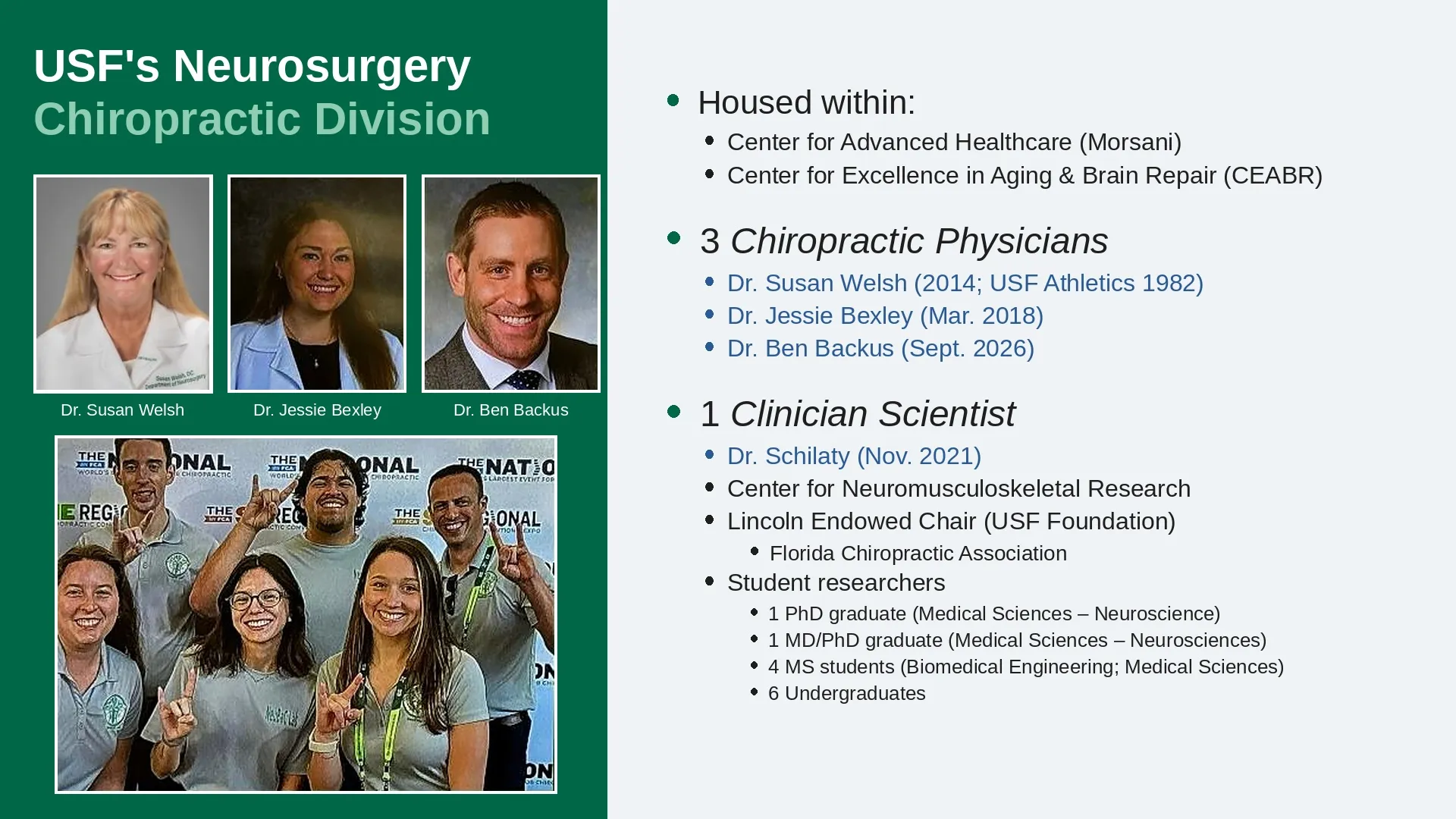
Looking for a Boston chiropractor focused on conservative, drug-free spine care? At Charles Street Family Chiropractic in Beacon Hill, Dr. Chris Quigley helps patients with back pain, neck pain, sciatica, disc problems, and recurring spinal conditions. Chiropractic care can support mobility, function, and active living while reducing reliance on medications and invasive procedures. Even major medical centers, including the University of South Florida Neurosurgery program, are integrating chiropractic care into collaborative spine treatment and research.
A 2015 MRI study found signs of alar ligament injury in 55% of older patients whose chronic neck pain had no other identifiable cause. For Boston and Massachusetts personal injury attorneys, that finding speaks to a familiar problem: the client who still hurts months after a car crash, but whose standard imaging reads as “normal” or “age-related degeneration.”
The number that should stop every elective-surgery patient in their tracks is 94%. In a large 2017 Journal of Pain Research study of 1,842 people who had undergone lumbar spine surgery, 94% reported some degree of residual low-back pain. That does not mean 94% had severe pain, nor does it mean 94% of the operations were surgical failures. But for an invasive procedure that many patients understandably hope will eliminate their back pain, the persistence of any low-back pain in such a large proportion of respondents is difficult to dismiss. The same study found that 20.6% met the researchers’ criteria for failed back surgery syndrome —roughly one out of every five patients. Residual numbness was reported by 69.8%, cold sensations by 43.3%, and paresthesia such as tingling or abnormal sensations by 35.3%.