Give it a little time and eventually it will go away. Unfortunately, that’s not how it works for everyone.
For some people, what begins as a sore and stiff neck after a car accident develops into months of neck pain, headaches, restricted movement, tingling, numbness, or pins and needles traveling into the arm or hand.
At that point, patients often start wondering:
“Why am I still hurting—and is there anything that can actually help?”
In a follow up from their ground breaking 1996 study, Dr.’s Khan, Gargan, Cook and Bannister from the University Department of Orthopaedic Surgery in Bristol asked essentially the same question. Instead of simply studying whether chiropractic helped chronic whiplash, they wanted to know something even more useful:
Which types of chronic whiplash patients were most likely to respond to chiropractic treatment?
They evaluated 93 patients with chronic whiplash symptoms and discovered something fascinating. They divided the sample into three groups. The answer depended heavily on what kind of symptoms the patient had.
74% of Chronic Whiplash Patients Improved
The patients received an average of 19.3 treatments over approximately 4.1 months. The treatment consisted of chiropractic spinal manipulation using a high-velocity, low-amplitude thrust directed at specific vertebral segments.
The big result?
69 of the 93 patients improved following chiropractic treatment.
But things get even more interesting when we look at which patients improved.
Neck Pain and Restricted Motion: 72% Improved
The first group consisted of people with neck pain—often spreading across the neck and shoulders in what the researchers called a “coat-hanger” distribution—along with restricted neck movement.
Of these patients:
72% benefited from chiropractic spinal manipulation.
Even better, 24% became asymptomatic, while another 24% improved by two grades on the researchers’ symptom scale.
Not bad for the neck that was supposedly going to “just get better.”
Tingling or Numbness? The Results Were Even More Interesting
The second group may be particularly relevant to people experiencing neurological symptoms after a car accident.
These patients had neck pain and restricted movement accompanied by symptoms such as: Tingling. Numbness. Pins and needles. Altered sensation in the arm or hand.
In this group, 30 of 32 patients—94%—responded positively to chiropractic manipulation.
Additionally, 38% became asymptomatic, and 43% improved by two symptom grades.
Interestingly, the researchers noted that although neurological findings had traditionally been associated with a poorer prognosis, these patients demonstrated the greatest improvement in disability in their study.
Not Every Whiplash Patient Is the Same
Chiropractic didn’t help everybody equally.
A third group consisted of patients with severe neck pain but full neck movement and without neurological findings following a specific nerve distribution. This type of distribution indicates damage to the vertebral discs.
Only 27% of this group improved.
That’s an important lesson. The question shouldn’t simply be: “Do you have whiplash?”
A better question is:
“What structures were injured, what symptoms do you have, and what type of whiplash patient are you?”
That’s why a thorough examination matters. In our office we perform our 3D Neurobiostructural examination which is designed to locate the cause of your problem so we can address it in the right way. We have non-surgical spinal decompression to address disc injuries with our two types of spinal decompression tables.
Whiplash Isn’t Always a Two-Week Problem
The researchers noted previous literature suggesting that only 57% of injured patients make a full recovery and that symptom resolution may take as long as two years. They also reported that approximately 8% could remain disabled by their symptoms.
So if you’re still hurting months after a Boston car accident, don’t assume you’re imagining it—and don’t assume nothing can be done simply because time has passed.
Still experiencing neck pain, stiffness, headaches, tingling, or numbness after a car accident? Call Charles Street Family Chiropractic and schedule an evaluation.
We are Boston’s Car Crash Experts.
Reference
Khan S, Cook J, Gargan M, Bannister G. The Journal of Orthopaedic Medicine. 1999;21(1):22–25.
“I was majoring in chemistry at Villanova University when my path turned to chiropractic. I was going on interviews to be a pharmaceutical sales representative, and they always asked me what I wanted to be doing in five years. My answer was always the same: “I want to be helping people, enjoying my work, while making a difference.”
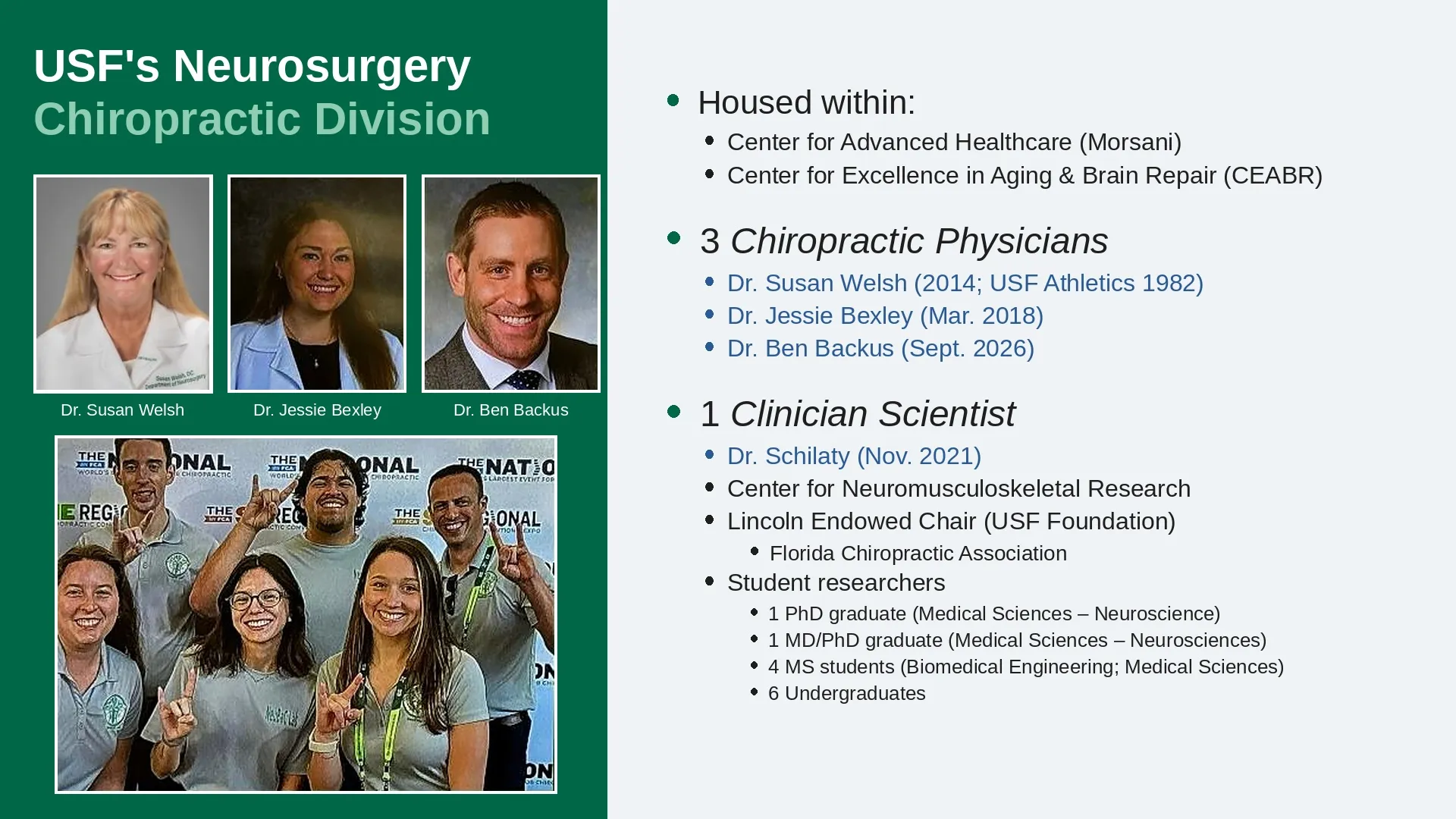
Looking for a Boston chiropractor focused on conservative, drug-free spine care? At Charles Street Family Chiropractic in Beacon Hill, Dr. Chris Quigley helps patients with back pain, neck pain, sciatica, disc problems, and recurring spinal conditions. Chiropractic care can support mobility, function, and active living while reducing reliance on medications and invasive procedures. Even major medical centers, including the University of South Florida Neurosurgery program, are integrating chiropractic care into collaborative spine treatment and research.
A 2015 MRI study found signs of alar ligament injury in 55% of older patients whose chronic neck pain had no other identifiable cause. For Boston and Massachusetts personal injury attorneys, that finding speaks to a familiar problem: the client who still hurts months after a car crash, but whose standard imaging reads as “normal” or “age-related degeneration.”
The number that should stop every elective-surgery patient in their tracks is 94%. In a large 2017 Journal of Pain Research study of 1,842 people who had undergone lumbar spine surgery, 94% reported some degree of residual low-back pain. That does not mean 94% had severe pain, nor does it mean 94% of the operations were surgical failures. But for an invasive procedure that many patients understandably hope will eliminate their back pain, the persistence of any low-back pain in such a large proportion of respondents is difficult to dismiss. The same study found that 20.6% met the researchers’ criteria for failed back surgery syndrome —roughly one out of every five patients. Residual numbness was reported by 69.8%, cold sensations by 43.3%, and paresthesia such as tingling or abnormal sensations by 35.3%.