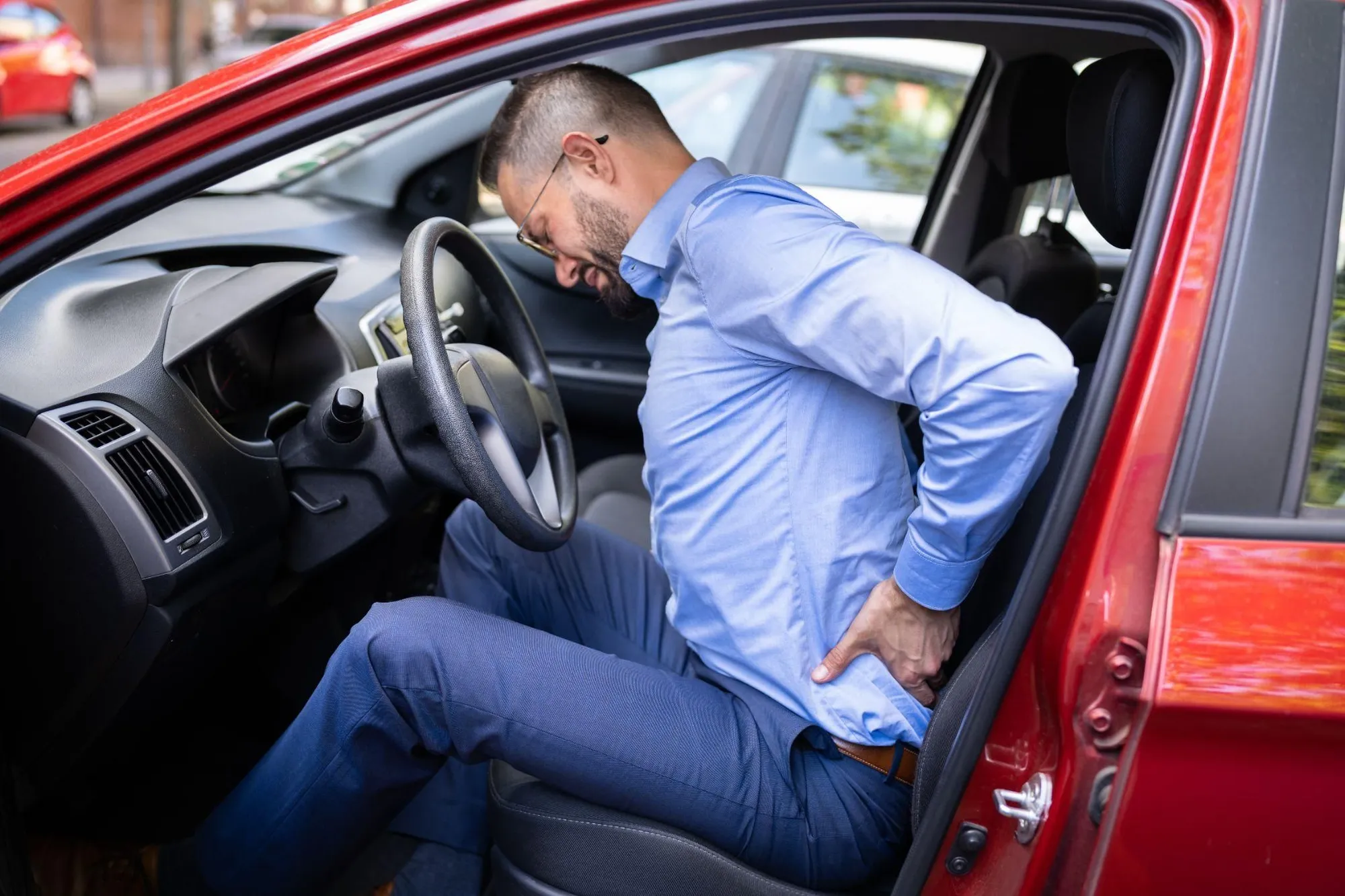
One of the most common defenses in motor vehicle collision litigation is that low back pain should resolve within a few weeks or months. If a client continues to experience pain years after the crash, insurance companies often argue that age, degeneration, or unrelated life events must be responsible.
A landmark population-based cohort study published by Nolet et al. in the January 2018 European Spine Journal suggests otherwise.
Researchers investigated whether people who sustained a low back injury in a motor vehicle collision were more likely to experience future low back pain later in life. Their findings provide compelling evidence that a motor vehicle collision can have long-lasting consequences, even long after the accident itself has faded from memory.
For personal injury attorneys, this study provides powerful scientific support for the concept that a collision can permanently alter the health of the lumbar spine.
Looking Beyond the Immediate Injury
Unlike many studies that only examine patients for a few weeks or months after an accident, this investigation asked a much larger question:
Does a history of low back injury from a motor vehicle collision increase the likelihood of future low back pain?
To answer this question, researchers analyzed data from a large population-based cohort and compared individuals with a prior motor vehicle-related low back injury to those without such a history.
Their conclusion was straightforward.
People who reported a previous motor vehicle collision involving a low back injury were significantly more likely to report ongoing or future low back pain than individuals who had never sustained that type of injury.
Trauma Can Change the Spine
Many people assume that once the bruises disappear and X-rays look normal, the injury has healed.
Unfortunately, spinal biomechanics are rarely that simple.
During a collision, enormous forces are transmitted through the lumbar spine. Even in relatively low-speed crashes, these forces may injure:
· Lumbar facet joints
· Spinal ligaments
· Intervertebral discs
· Muscles and tendons
· Joint capsules
· Supporting connective tissues
Many of these structures contain pain-sensitive nerve endings.
Some injuries heal completely.
Others create lasting biomechanical changes that increase the likelihood of chronic or recurrent pain.
Degeneration Isn’t Always the Whole Story
Insurance carriers frequently point to MRI reports showing “degenerative disc disease” or arthritis as evidence that the client’s symptoms are unrelated to the collision. This is wrong. The fact that the patient had degeneration means their spine was in a weakened state at the time of the crash and will suffer more injury with less trauma than a healthy spine.
This study reminds us that trauma and degeneration are not mutually exclusive.
A motor vehicle collision frequently can aggravate previously silent degenerative changes or accelerate symptoms that might never have become clinically significant.
The presence of age-related degeneration does not erase the effects of traumatic injury.
Instead, the two will interact.
Why Early Conservative Care Matters
The authors emphasize that low back pain following a motor vehicle collision deserves appropriate evaluation and treatment.
Current clinical guidelines increasingly recommend conservative, active care as the first line of treatment for most patients.
Chiropractic physicians are uniquely trained to identify biomechanical dysfunctions of the lumbar spine and provide conservative treatment that may include:
· Spinal manipulation when clinically appropriate
· Joint mobilization
· Therapeutic exercise
· Soft tissue therapy
· Functional rehabilitation
· Postural correction
· Patient education
Rather than simply masking symptoms with medication, these approaches focus on restoring movement, improving spinal function, and reducing the likelihood that an acute injury becomes a chronic problem.
Defense experts often suggest that chronic low back pain developing months or years after a collision cannot reasonably be connected to the original injury.
This study directly challenges that assumption.
The research demonstrates that a history of motor vehicle-related low back injury is associated with a significantly increased risk of future low back pain.
That finding supports what many clinicians observe every day: spinal trauma can produce lasting consequences that extend well beyond the initial recovery period.
When representing clients injured in Boston, Cambridge, Quincy, Newton, Brookline, or throughout Massachusetts, understanding the long-term effects of lumbar spine trauma can help explain why ongoing symptoms remain medically reasonable and scientifically supported.
The Bottom Line
Motor vehicle collisions do not always end when the tow truck leaves the scene.
For many people, the effects continue for years.
This population-based study provides strong evidence that individuals who sustain a low back injury in a motor vehicle collision have a greater risk of experiencing future low back pain than those who have never been injured in a crash.
For attorneys, that means persistent lumbar pain should not automatically be dismissed as aging or unrelated degeneration. The scientific literature increasingly recognizes that trauma can create long-lasting biomechanical changes that continue to affect a person’s health, function, and quality of life.
If you have questions regarding the biomechanics of lumbar spine injuries or need assistance understanding the medical aspects of a motor vehicle collision case, call Dr. Chris Quigley at 617-720-1992.
Reference
Nolet PS, Kristman VL, Côté P, Carroll LJ, Cassidy JD. The Association Between a Lifetime History of Low Back Injury in a Motor Vehicle Collision and Future Low Back Pain: A Population-Based Cohort Study.European Spine Journal. 2018;27(1):136-144. doi:10.1007/s00586-017-5090-y.
“I was majoring in chemistry at Villanova University when my path turned to chiropractic. I was going on interviews to be a pharmaceutical sales representative, and they always asked me what I wanted to be doing in five years. My answer was always the same: “I want to be helping people, enjoying my work, while making a difference.”
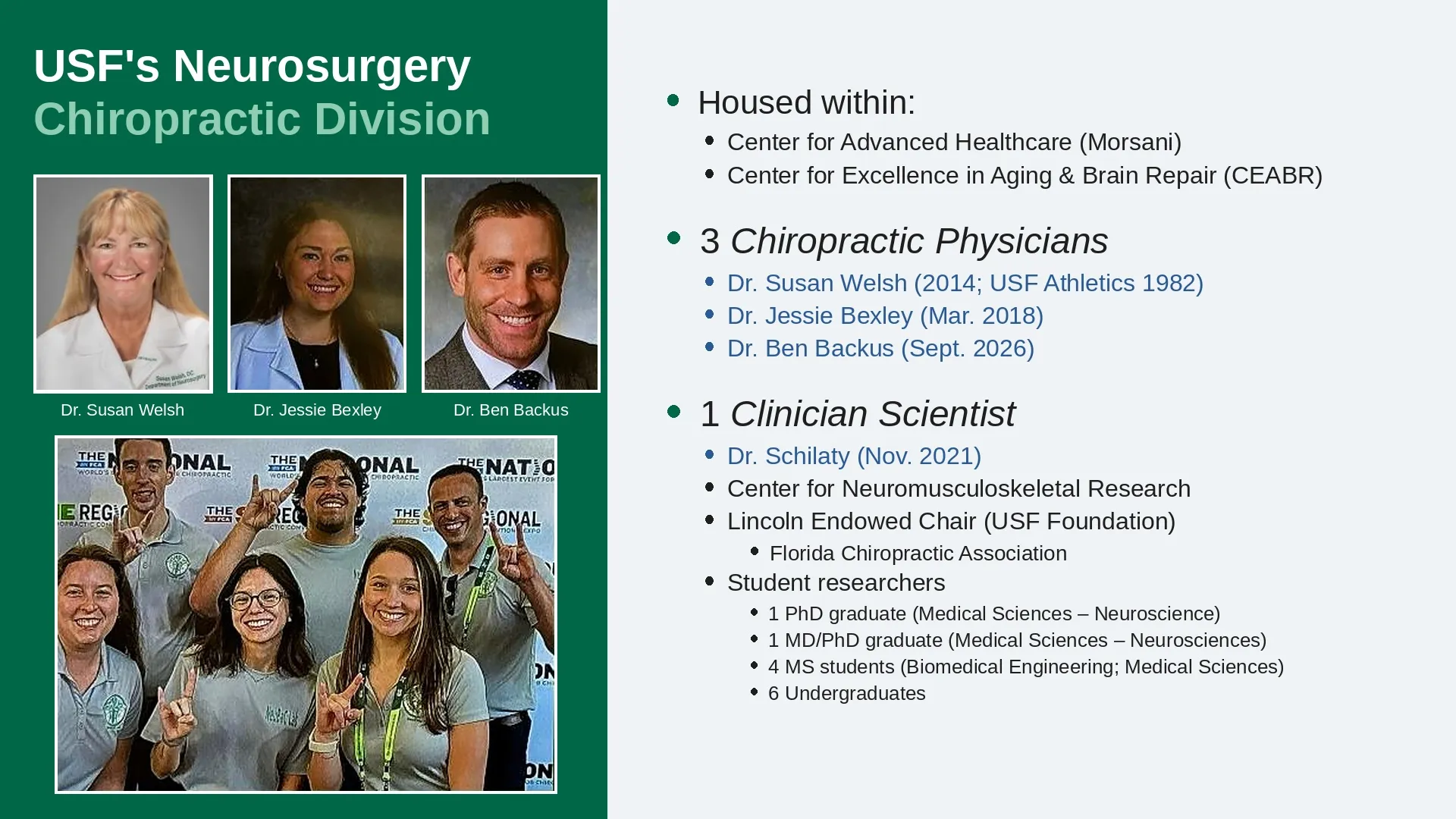
Looking for a Boston chiropractor focused on conservative, drug-free spine care? At Charles Street Family Chiropractic in Beacon Hill, Dr. Chris Quigley helps patients with back pain, neck pain, sciatica, disc problems, and recurring spinal conditions. Chiropractic care can support mobility, function, and active living while reducing reliance on medications and invasive procedures. Even major medical centers, including the University of South Florida Neurosurgery program, are integrating chiropractic care into collaborative spine treatment and research.
A 2015 MRI study found signs of alar ligament injury in 55% of older patients whose chronic neck pain had no other identifiable cause. For Boston and Massachusetts personal injury attorneys, that finding speaks to a familiar problem: the client who still hurts months after a car crash, but whose standard imaging reads as “normal” or “age-related degeneration.”
The number that should stop every elective-surgery patient in their tracks is 94%. In a large 2017 Journal of Pain Research study of 1,842 people who had undergone lumbar spine surgery, 94% reported some degree of residual low-back pain. That does not mean 94% had severe pain, nor does it mean 94% of the operations were surgical failures. But for an invasive procedure that many patients understandably hope will eliminate their back pain, the persistence of any low-back pain in such a large proportion of respondents is difficult to dismiss. The same study found that 20.6% met the researchers’ criteria for failed back surgery syndrome —roughly one out of every five patients. Residual numbness was reported by 69.8%, cold sensations by 43.3%, and paresthesia such as tingling or abnormal sensations by 35.3%.