Picture this: your spine cracks, your brain perks up, and suddenly you sleep better, smile more and stop limping through life like a DVD stuck on repeat. Sound far-fetched? That’s exactly what the Dr. Heidi Haavik and her team of researchers behind this study found. As a long-term chiropractor in Boston, we have seen the same phenomenon with are patients over our 35+ years.
In this trial, 76 adults with chronic low back pain were split into two teams: one group received regular chiropractic care, the other didn’t. Using fancy tools — brain waves (EEG), somatosensory evoked potentials (SEPs), Fitbits, and self-reports — the scientists measured not only “did your back stop hurting?” but “did your brain, mood, sleep, and quality of life join the party too?” The answer: YES. (Really.)
What Happened in the Brain?
After just one chiropractic session — and then again after four weeks — the group getting care showed significant changes in brain-wave patterns.
Theta, Alpha, and Beta waves increased, while Delta wave power dropped.
Within key brain networks like the “default mode network” (you know, the brain’s idle lounge), alpha activity rose.
The SEP peak N30 amplitude dropped after treatment — meaning the nervous system responded differently to sensory input.
In other words: the spine adjustment didn’t just click and pop a vertebrae — it flicked brain switches.
But Did Life Get Better Too?
Oh yes. Over the four-week period, those patients reported:
Less pain
Less anxiety & depression
Less fatigue
Better quality of life
Improved light-sleep stages (the kind of sleep where you don’t wake up remembering every dog bark and 3 a.m. “am I still alive?” thought)
So yes: aligning your spine may align much more than your vertebrae — it might align your brain, body and well-being.
Why Could This Be Happening?
Here’s a mental image: you’ve got a glitchy circuit board (your spine + nervous system), wires all tangled, and the whole thing sparking weird signals (pain, sleep trouble, mood dips). A chiropractic adjustment acts like an unexpected reboot — it clears static, reroutes signals, and brings things back into balance.
When spinal joints are stuck or misaligned, they don’t just cause local pain — they throw off the flow of nerve signals to your spinal cord and brain. Restore motion, reduce interference, the brain calms, the body responds. That’s neuroplasticity in action: your nervous system physically reorganizing in response to changed inputs.
Who Should Care About This
If you’ve had chronic back pain and tried everything from heat pads to walking the dog until the dog gives up.
If you realized your sleep sucks, and maybe your mood did too, and you didn’t make the connection yet.
If you think “chiropractor” is just for dodgy backs — this study says: maybe it’s for your brain too.
A Few Friendly Disclaimers
This study was on people with chronic low back pain
Chiropractic care here wasn’t “one crack and done” — it spanned four weeks and involved neuro-physiological measures, not just “pop and leave.”
This study further documents what we have seen in our Boston Chiropractic office over the past 35 years.
The Takeaway
Your spine isn’t just a stack of bones — it’s part of the grand information highway that your brain rides on. When that highway gets a traffic jam (misalignment, joint restriction), it’s not just your back that complains — your brain, mood, sleep, and life join the protest. This study offers compelling evidence that chiropractic care can unclog that traffic, reboot the system, and give you not just pain relief but a whole-body uplift.
So, if you’re stuck on that rerun of “same old aches, same bad sleep, same meh mood” — maybe consider that the missing piece is your spine-brain connection. Adjust it, reroute the signals, and you might just find yourself waking up feeling like the upgraded version of you. Call us today at 617-720-1992 to get your adjustment scheduled. We are Boston back pain specialists and look forward to seeing if we can help you get back to where you want life to be.
“I was majoring in chemistry at Villanova University when my path turned to chiropractic. I was going on interviews to be a pharmaceutical sales representative, and they always asked me what I wanted to be doing in five years. My answer was always the same: “I want to be helping people, enjoying my work, while making a difference.”
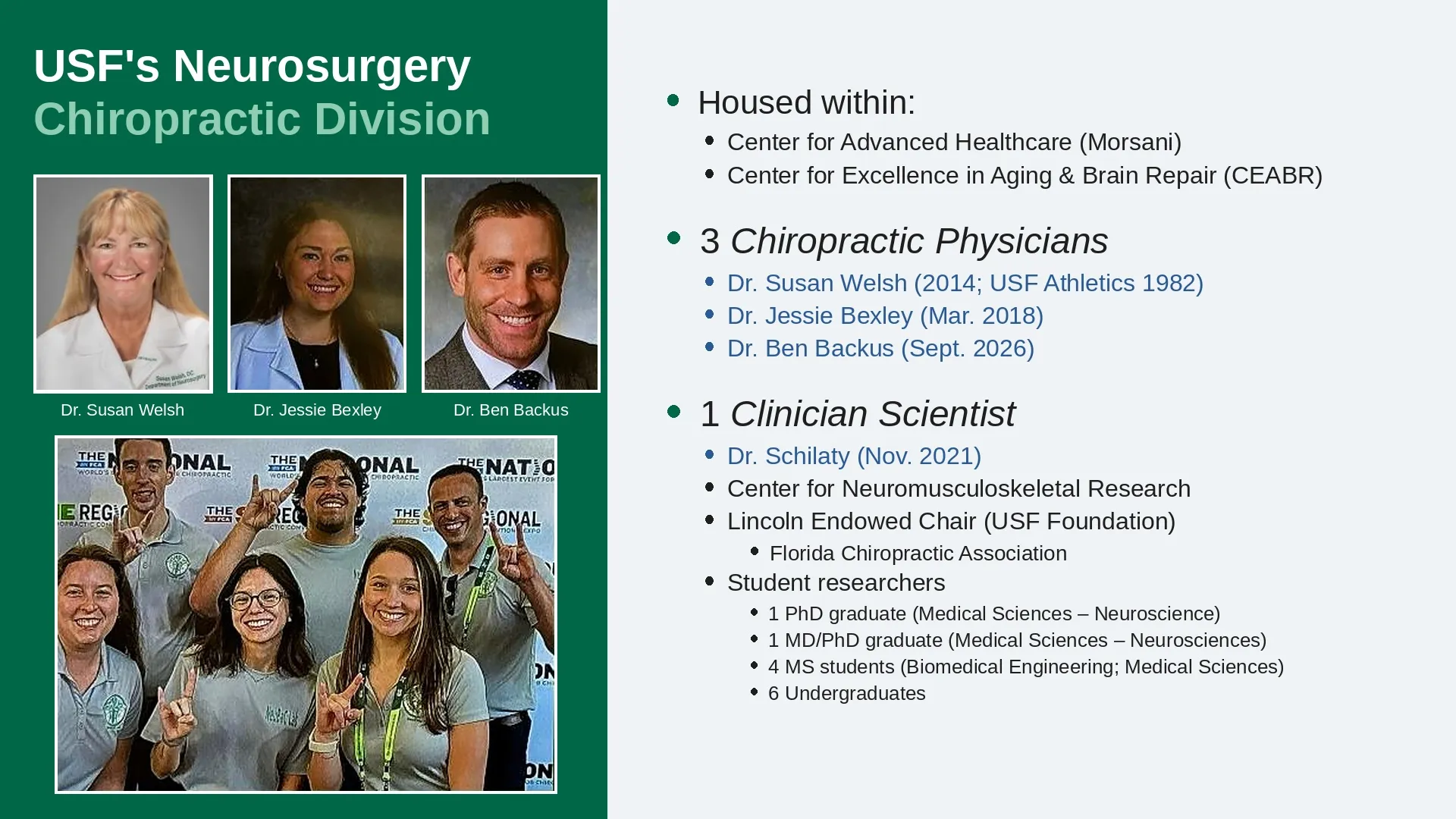
Looking for a Boston chiropractor focused on conservative, drug-free spine care? At Charles Street Family Chiropractic in Beacon Hill, Dr. Chris Quigley helps patients with back pain, neck pain, sciatica, disc problems, and recurring spinal conditions. Chiropractic care can support mobility, function, and active living while reducing reliance on medications and invasive procedures. Even major medical centers, including the University of South Florida Neurosurgery program, are integrating chiropractic care into collaborative spine treatment and research.
A 2015 MRI study found signs of alar ligament injury in 55% of older patients whose chronic neck pain had no other identifiable cause. For Boston and Massachusetts personal injury attorneys, that finding speaks to a familiar problem: the client who still hurts months after a car crash, but whose standard imaging reads as “normal” or “age-related degeneration.”
The number that should stop every elective-surgery patient in their tracks is 94%. In a large 2017 Journal of Pain Research study of 1,842 people who had undergone lumbar spine surgery, 94% reported some degree of residual low-back pain. That does not mean 94% had severe pain, nor does it mean 94% of the operations were surgical failures. But for an invasive procedure that many patients understandably hope will eliminate their back pain, the persistence of any low-back pain in such a large proportion of respondents is difficult to dismiss. The same study found that 20.6% met the researchers’ criteria for failed back surgery syndrome —roughly one out of every five patients. Residual numbness was reported by 69.8%, cold sensations by 43.3%, and paresthesia such as tingling or abnormal sensations by 35.3%.