Insurance companies often portray whiplash as a minor injury that resolves in a few weeks with little more than rest and over-the-counter pain medication. Yet anyone who has represented clients following a motor vehicle collision knows the reality can be very different. Persistent neck pain, headaches, dizziness, numbness, and chronic disability frequently continue long after the damaged vehicle has been repaired.
A comprehensive review published in Advances in Orthopedics in 2018 explains why whiplash is far more complex than many people realize. The authors describe whiplash as a biomechanical injury capable of damaging multiple tissues throughout the cervical spine, including the facet joints, ligaments, muscles, intervertebral discs, and nerve structures.
Whiplash Is a Multi-Tissue Injury
During a rear-end collision, the cervical spine experiences rapid acceleration and deceleration forces within milliseconds. These forces can injure several structures simultaneously.
Commonly injured tissues include:
· Cervical facet joints
· Ligaments
· Intervertebral discs
· Muscles and tendons
· Joint capsules
· Nerve roots
· Supporting soft tissues
Because so many structures may be involved, every whiplash injury is different, and recovery varies from patient to patient.
Facet Joints Frequently Generate Chronic Pain
The review highlights the cervical facet joints as one of the most common sources of persistent neck pain following whiplash injuries.
Importantly, these injuries often cannot be seen on standard X-rays and may not be obvious on routine MRI studies. As a result, patients are sometimes told that “everything looks normal” despite ongoing pain and disability.
For attorneys, this helps explain why the absence of dramatic imaging findings should never be mistaken for the absence of a significant injury.
Early Conservative Treatment Is Critical
One of the strongest messages in the review is that prolonged rest and immobilization are no longer considered the preferred approach for most patients.
Instead, the evidence supports early conservative management focused on restoring motion, reducing pain, and returning patients to normal activity as safely and quickly as possible.
Among conservative treatment options, chiropractic care offers several evidence-supported components of modern whiplash management, including:
· Spinal manipulation or mobilization when clinically appropriate
· Restoration of normal joint motion
· Therapeutic exercise
· Soft tissue therapy
· Postural correction
· Patient education
· Progressive return to activity
Rather than simply masking symptoms with medication, these approaches are designed to improve spinal function while addressing the mechanical problems that often develop after a collision.
Numerous clinical practice guidelines published over the past decade have similarly recommended multimodal conservative care—including manual therapy, exercise, and education—as first-line management for many patients with whiplash-associated disorders.
Why This Matters in Litigation
Whiplash injuries frequently involve soft tissues that cannot always be visualized using conventional imaging.
Ligament injuries, facet joint dysfunction, capsular injuries, and muscle damage may produce significant pain despite relatively normal radiology reports.
This review reinforces that chronic whiplash symptoms have a well-recognized biological basis and should not be dismissed simply because advanced imaging appears unremarkable.
The Takeaway
For Boston personal injury attorneys, this review provides an important reminder that successful recovery from whiplash depends on recognizing the injury early and directing patients toward appropriate conservative care.
Current evidence supports an active, movement-based approach rather than prolonged rest. Chiropractic physicians are uniquely trained to evaluate the biomechanics of the cervical spine and deliver conservative treatments—including manual therapy, spinal manipulation when indicated, therapeutic exercise, and patient education—that are consistent with modern evidence-based recommendations.
While no single treatment is appropriate for every patient, the scientific literature increasingly supports chiropractic care as an important first-line option for many individuals recovering from whiplash injuries. Early intervention can improve function, reduce pain, and may help decrease the likelihood of long-term disability.
For attorneys, understanding this evolving evidence helps explain why prompt referral for appropriate conservative care is not only medically sound—it can also significantly influence the long-term outcome of a client’s injury claim. Call Dr. Quigley today at 617-720-1992 to discuss your cases.
Tanaka N, Atesok K, Nakanishi K, Kamei N, Nakamae T, Kotaka S, Adachi N. Pathology and Treatment of Traumatic Cervical Spine Syndrome: Whiplash Injury.Advances in Orthopedics. 2018;2018:4765050. doi:10.1155/2018/4765050. PMID: 29682354. PMCID: PMC5851023.
“I was majoring in chemistry at Villanova University when my path turned to chiropractic. I was going on interviews to be a pharmaceutical sales representative, and they always asked me what I wanted to be doing in five years. My answer was always the same: “I want to be helping people, enjoying my work, while making a difference.”
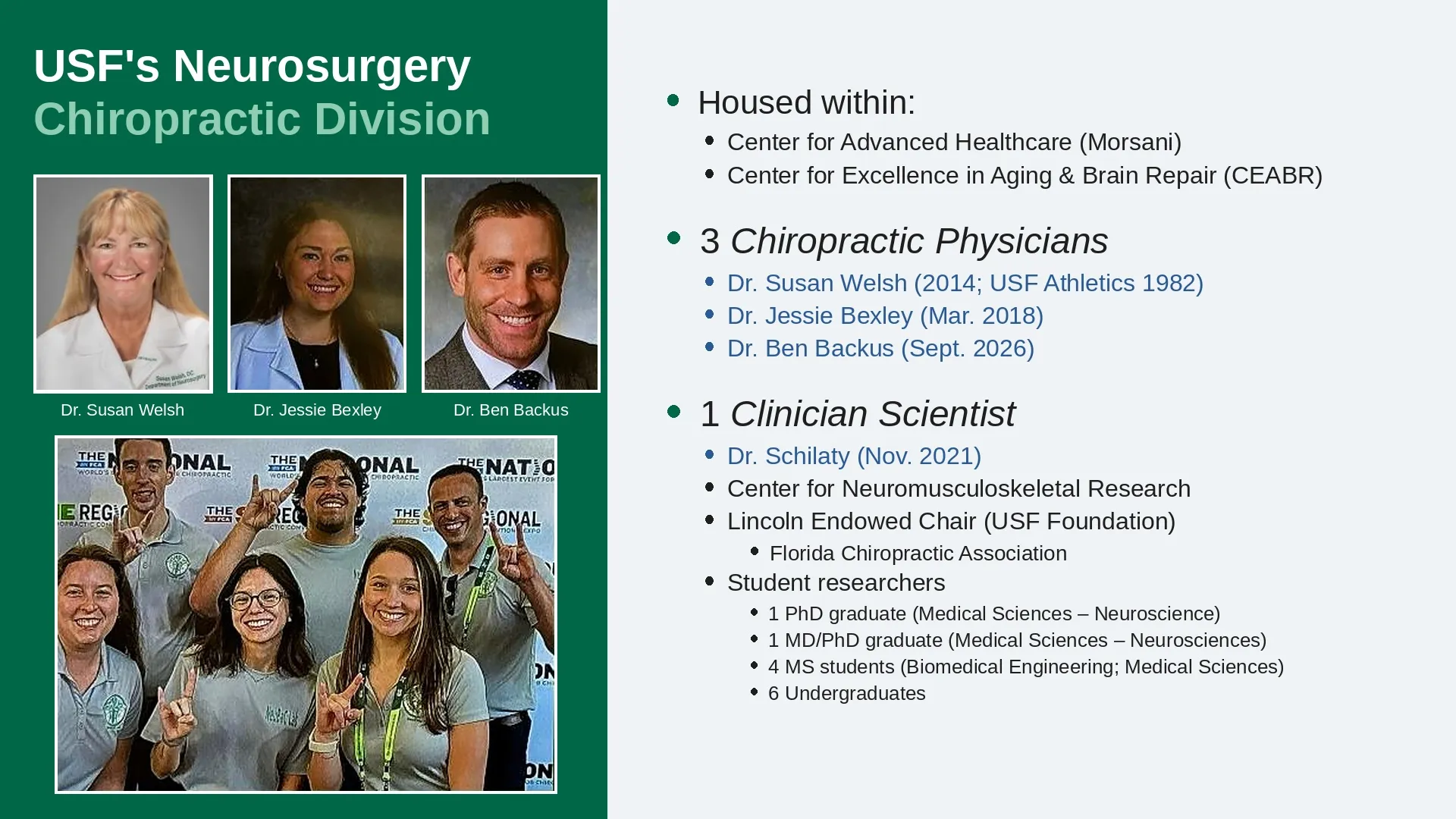
Looking for a Boston chiropractor focused on conservative, drug-free spine care? At Charles Street Family Chiropractic in Beacon Hill, Dr. Chris Quigley helps patients with back pain, neck pain, sciatica, disc problems, and recurring spinal conditions. Chiropractic care can support mobility, function, and active living while reducing reliance on medications and invasive procedures. Even major medical centers, including the University of South Florida Neurosurgery program, are integrating chiropractic care into collaborative spine treatment and research.
A 2015 MRI study found signs of alar ligament injury in 55% of older patients whose chronic neck pain had no other identifiable cause. For Boston and Massachusetts personal injury attorneys, that finding speaks to a familiar problem: the client who still hurts months after a car crash, but whose standard imaging reads as “normal” or “age-related degeneration.”
The number that should stop every elective-surgery patient in their tracks is 94%. In a large 2017 Journal of Pain Research study of 1,842 people who had undergone lumbar spine surgery, 94% reported some degree of residual low-back pain. That does not mean 94% had severe pain, nor does it mean 94% of the operations were surgical failures. But for an invasive procedure that many patients understandably hope will eliminate their back pain, the persistence of any low-back pain in such a large proportion of respondents is difficult to dismiss. The same study found that 20.6% met the researchers’ criteria for failed back surgery syndrome —roughly one out of every five patients. Residual numbness was reported by 69.8%, cold sensations by 43.3%, and paresthesia such as tingling or abnormal sensations by 35.3%.