For decades, few injuries have generated as much controversy in personal injury litigation as whiplash. Defense experts have questioned its legitimacy, insurers have challenged its severity, and juries have often struggled with claims involving persistent symptoms despite normal imaging studies. Yet modern research increasingly supports the conclusion that whiplash-associated disorders (WAD) are legitimate injuries with identifiable biomechanical and neurophysiological mechanisms.
The paper “Whiplash, Real or Not Real? A Review and New Concept” revisits this longstanding debate and provides important insights for attorneys handling motor vehicle collision cases. The article examines why whiplash remains controversial and presents evidence challenging the notion that chronic symptoms are merely psychological, exaggerated, or compensation-driven.
Why Whiplash Has Been Questioned
Unlike fractures, dislocations, or traumatic brain injuries, whiplash often leaves little visible evidence on conventional diagnostic imaging. Many patients present with neck pain, headaches, dizziness, cognitive complaints, and reduced function despite normal X-rays, CT scans, or MRI findings. This disconnect has historically fueled skepticism among insurers and defense experts.
Adding to the controversy, some researchers have argued that chronic whiplash symptoms are influenced by psychosocial factors, litigation, or cultural expectations. Critics have pointed to varying rates of chronic symptoms between countries and populations as evidence that whiplash may not represent a distinct injury entity.
However, the absence of obvious imaging findings does not rule out injury. Many soft-tissue, ligamentous, joint-capsule, and neurological injuries are difficult or impossible to visualize with routine imaging techniques. This distinction is critical in litigation. The challenge with these injuries is that very few specialists are familiar with the techniques to document these potentially debilitating injuries.
The Biomechanics of Whiplash
Modern biomechanical research demonstrates that rear-end collisions create rapid acceleration-deceleration forces that produce complex movement patterns within the cervical spine. Those caught by surprise will be injured the most. During impact, the neck does not simply move backward and forward. Instead, the cervical spine can briefly assume an abnormal S-shaped configuration, subjecting specific tissues to significant strain.
These forces may affect:
Facet (zygapophysial) joints
Joint capsules
Cervical ligaments
Muscles and tendons
Neural structures
Research associated with the work of Dr. Nikolai Bogduk has demonstrated that cervical facet joints are a common source of chronic neck pain following whiplash injuries. Diagnostic medial branch blocks have provided objective evidence of a link between these structures and persistent symptoms in many patients.
The “New Concept”
One of the most important themes emerging from the review is that whiplash should not be viewed as a single injury. Rather, it represents a spectrum of disorders involving multiple tissues and physiological systems.
The authors suggest that chronic whiplash symptoms may involve more than localized tissue damage. Persistent pain may reflect changes in pain processing, inflammation, neuromuscular dysfunction, and central nervous system sensitization. In other words, the injury may evolve from a purely mechanical event into a more complex biological condition.
This concept helps explain why some patients recover quickly while others experience symptoms for months or years despite relatively minor vehicle damage.
Implications for Personal Injury Litigation
For attorneys, the practical implications are significant.
First, low property damage does not necessarily equate to low injury potential. Numerous studies have demonstrated that occupant biomechanics are influenced by many factors beyond vehicle damage alone.
Second, normal imaging studies should not automatically be interpreted as evidence of no injury. Soft tissue injuries, facet joint injuries, and pain-processing abnormalities may exist despite negative radiographic findings.
Third, understanding the scientific basis of whiplash can strengthen causation arguments. Expert testimony that incorporates biomechanics, pain science, and facet joint research may provide juries with a more accurate understanding of why symptoms persist.
In my Boston practice, I specialize in documenting these injuries. My narrative reports documenting these injuries have helped legal counsel carry the day in securing proper compensation for their clients, often by many multiples.
Conclusion
The debate over whether whiplash is “real” has largely shifted from questioning its existence to understanding its complexity. Contemporary evidence supports the conclusion that whiplash-associated disorders are legitimate injuries involving identifiable anatomical and physiological mechanisms. While not every claimant will develop chronic symptoms, the scientific literature increasingly demonstrates that persistent pain after a collision cannot be dismissed simply because conventional imaging appears normal. For attorneys evaluating injury claims, the modern question is no longer whether whiplash is real—but rather which underlying mechanisms are responsible for an individual client’s symptoms. Call me at 617-720-1992 to discuss where you need help documenting the injuries to better make your case. Click here to view his credentials.
Ferrari, R., & Russell, A. S. (2015).Whiplash: Real or Not Real? A Review and a New Concept. Journal of Orthopaedics, Trauma and Rehabilitation, 19, 71–82. The authors review the scientific evidence surrounding whiplash-associated disorders and propose a broader biopsychosocial understanding of persistent symptoms following acceleration-deceleration injuries.
“I was majoring in chemistry at Villanova University when my path turned to chiropractic. I was going on interviews to be a pharmaceutical sales representative, and they always asked me what I wanted to be doing in five years. My answer was always the same: “I want to be helping people, enjoying my work, while making a difference.”
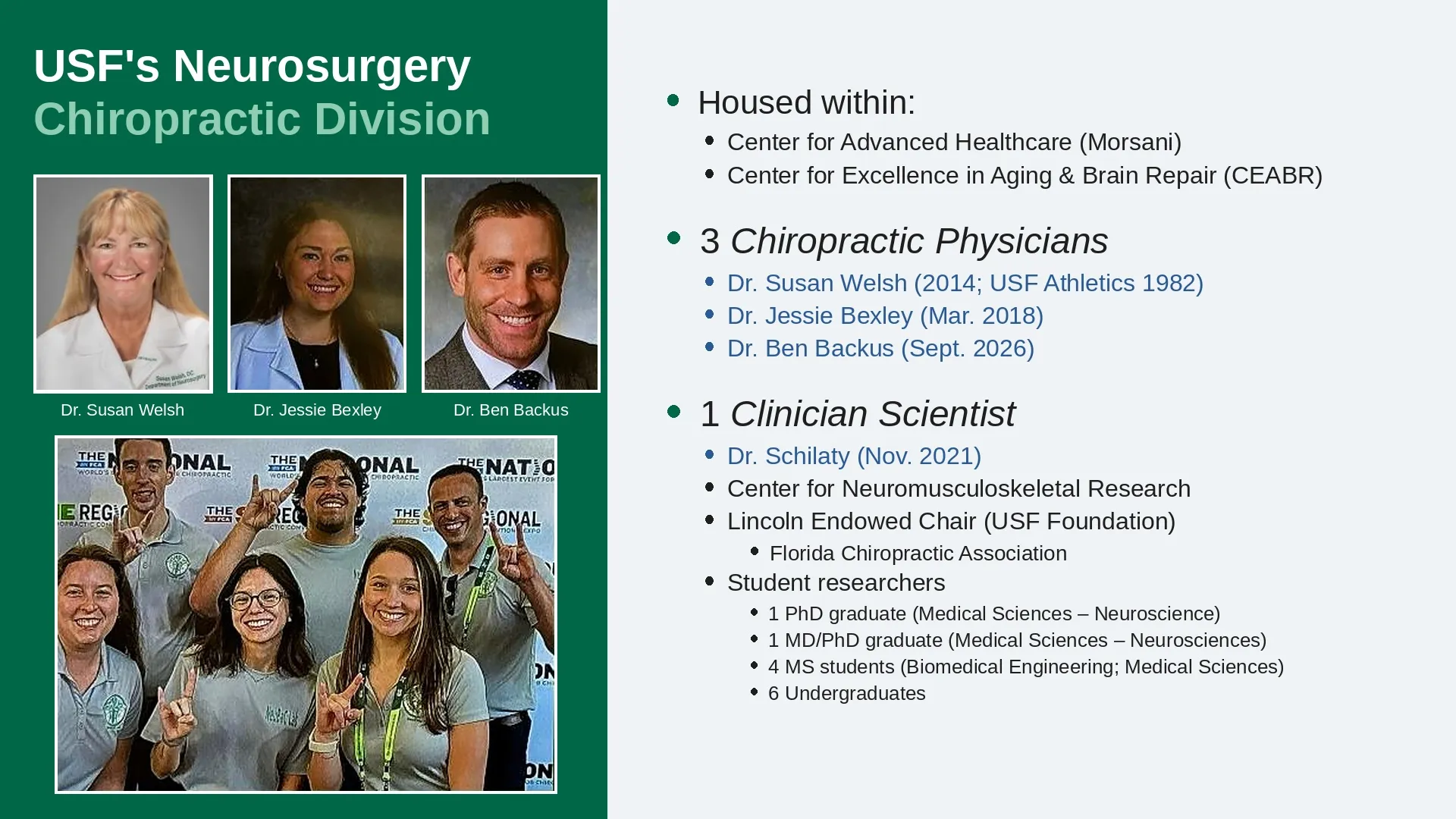
Looking for a Boston chiropractor focused on conservative, drug-free spine care? At Charles Street Family Chiropractic in Beacon Hill, Dr. Chris Quigley helps patients with back pain, neck pain, sciatica, disc problems, and recurring spinal conditions. Chiropractic care can support mobility, function, and active living while reducing reliance on medications and invasive procedures. Even major medical centers, including the University of South Florida Neurosurgery program, are integrating chiropractic care into collaborative spine treatment and research.
A 2015 MRI study found signs of alar ligament injury in 55% of older patients whose chronic neck pain had no other identifiable cause. For Boston and Massachusetts personal injury attorneys, that finding speaks to a familiar problem: the client who still hurts months after a car crash, but whose standard imaging reads as “normal” or “age-related degeneration.”
The number that should stop every elective-surgery patient in their tracks is 94%. In a large 2017 Journal of Pain Research study of 1,842 people who had undergone lumbar spine surgery, 94% reported some degree of residual low-back pain. That does not mean 94% had severe pain, nor does it mean 94% of the operations were surgical failures. But for an invasive procedure that many patients understandably hope will eliminate their back pain, the persistence of any low-back pain in such a large proportion of respondents is difficult to dismiss. The same study found that 20.6% met the researchers’ criteria for failed back surgery syndrome —roughly one out of every five patients. Residual numbness was reported by 69.8%, cold sensations by 43.3%, and paresthesia such as tingling or abnormal sensations by 35.3%.